CPM 2 Tips and Tricks
Written by David Kalin · Gaming reviews and blog writer · Last reviewed: October 2026
!Driving tips for Car Parking Multiplayer 2
My first drag race in Car Parking Multiplayer 2 lasted about four seconds. I launched at full throttle, lit up the rear tires, and watched the other car disappear while I sat there making expensive smoke. Nobody teaches you this stuff in the tutorial — so here are the tips I wish someone had given me on day one.
The three fastest ways to get better at CPM 2 are: learn manual transmission with clutch (it cuts shift times dramatically once mastered), brake before corners instead of during them, and spend your first week in the 82 parking challenges rather than multiplayer lobbies — structured practice beats random racing for building car control.
These 10 tips cover driving technique, multiplayer smarts, and performance settings. They’re ordered from foundational to advanced — nail the first five before worrying about the last five.
Driving Tips
1. Learn Manual With Clutch — It’s Worth the Pain
Automatic transmission is comfortable. Manual with clutch is faster. The working clutch in CPM 2 lets you control launches, rev-match downshifts, and hold gears through corners — and once the muscle memory clicks (usually after 3–5 hours of practice), you’ll be consistently quicker than any automatic driver.
Start in the parking challenges, not in races. Practice smooth launches: hold the clutch, rev to mid-range, release progressively. Stall a dozen times. Everyone does. Then take it to a quiet multiplayer lobby and practice until shifting feels boring — that’s when you know it’s locked in.
2. Brake Before the Corner, Not In It
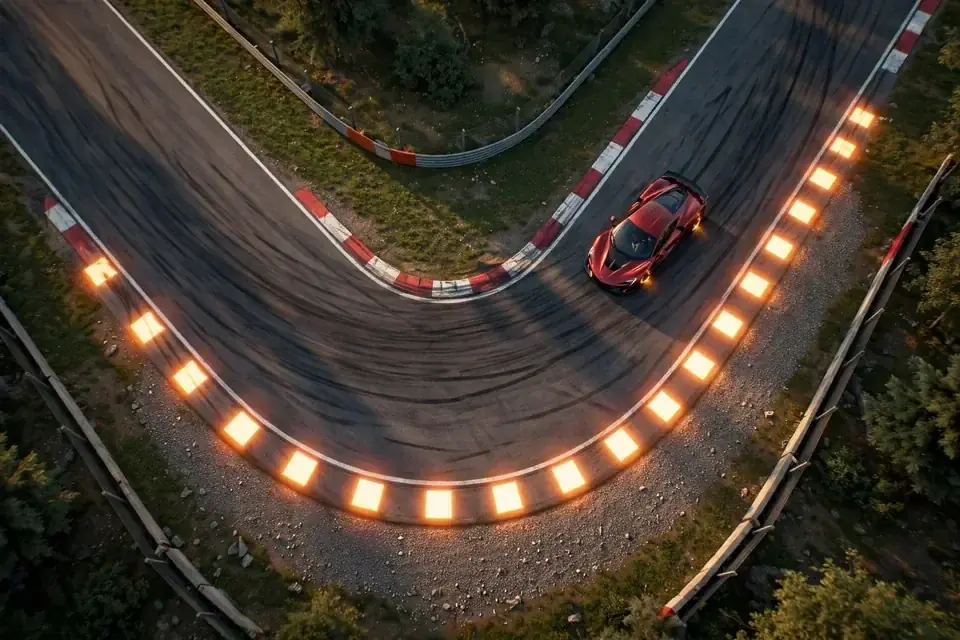
The single most common mistake new drivers make: carrying too much speed into corners and braking mid-turn. CPM 2’s physics punish this — braking while turning unloads the rear and sends you sliding.
The fix is simple: brake in a straight line, turn, then accelerate out. Slow in, fast out. You’ll feel slow for the first hour, then suddenly you’ll be passing everyone who dives into corners and slides wide.
3. Use the 82 Parking Challenges as a Driving School
CPM 2 includes 82 structured parking and driving challenges, and most players skip them. That’s a mistake. These challenges teach the exact skills multiplayer demands: precise steering, clutch timing, speed control, and spatial awareness — in a zero-pressure environment where mistakes cost nothing.
My recommendation: complete at least the first 25–30 challenges before spending serious time in competitive lobbies. You’ll arrive with car control that most lobby racers never bothered to build.
4. Cockpit View Makes You Faster (Eventually)
Chase cam feels natural, but cockpit view with the working dashboard gauges gives you better speed judgment and earlier turn-in points. The catch: it’s harder for the first few sessions.
Switch to cockpit view during solo practice, not during races. Give it a full week. Most drivers who commit never go back — the sense of speed and spatial precision is genuinely better once your brain adapts.
Multiplayer Tips
5. Car Meets Are Networking, Not Just Showing Off
Multiplayer car meets look like vanity parades, but they’re actually the game’s social economy in action. This is where you see what’s fast, learn what good tuning looks like, trade cars, and make friends who’ll invite you to better lobbies.
Show up with a clean build (see our car customization guide), be respectful, and ask questions. The CPM 2 community is surprisingly generous with advice — “what suspension are you running?” is a better conversation starter than any emote.
6. Voice Chat Wins Races and Makes Friends
CPM 2 supports voice chat, and using it transforms multiplayer from anonymous chaos into actual coordinated play. Call out your intentions in cruises (“turning left at the junction”), coordinate in team events, or just chat at meets.
Practical tip: keep a cheap earbud mic setup. Phone speakers create echo that annoys lobbies. And mute yourself when you’re not talking — background noise is the fastest way to get voted out of a good lobby.
7. Don’t Race Your Daily Driver in High-Stakes Lobbies
Vehicle damage is real in CPM 2, and repairs cost money. If you’re entering competitive races or chaotic public lobbies, consider what you’re risking. That fully-tuned Supra you’ve sunk 200,000 cash into? Maybe don’t take it into a demolition-style free roam with strangers.
Keep a cheaper “beater” car for chaotic lobbies and save the good builds for meets, organized races, and friends. This one habit will save you an enormous repair bill over time.
Performance Tips
8. Dyno Every Build Before Racing It
CPM 2’s dyno run feature shows your exact horsepower, torque curve, and RPM behavior after tuning. Drivers who skip it are guessing; drivers who use it know.
Before any competitive session: dyno the car, note the powerband, and make sure your gearing suits it. A car making peak power at 7,000 RPM with gearing that shifts at 6,000 is leaving free performance on the table. Two minutes on the dyno fixes that.
9. Lower Graphics Before Blaming Your Car
If the game stutters, your driving suffers — missed braking points, jerky steering, delayed shifts. Before assuming your device can’t handle CPM 2, drop the graphics settings: shadows off or low, reduced resolution scale, and capped frame rate.
A stable 30 FPS with clean inputs beats a stuttering 60 FPS every time. Competitive players on mid-range phones almost all run reduced settings. There’s no shame in it — there’s only slower lap times if you don’t. For the full breakdown, see our lag fix guide.
10. Fuel and Maintenance Are Strategy, Not Chores
CPM 2 simulates fuel, tire condition, and general maintenance. Ignore them and you’ll run dry mid-session or wonder why your grip disappeared. The smart play: refuel before long cruises, check tires before races, and keep maintenance routine.
Here’s why this matters competitively: a well-maintained car with fresh tires will out-handle a neglected “faster” car. Maintenance is free performance that most players leave on the table.
Quick-Reference Checklist
- [ ] Manual with clutch learned (3–5 hours practice)
- [ ] Braking done before corners, not during
- [ ] 25+ parking challenges completed
- [ ] Dyno run done on every tuned car
- [ ] Graphics tuned for stable framerate
- [ ] Beater car kept for chaotic lobbies
- [ ] Fuel and tires checked before sessions